

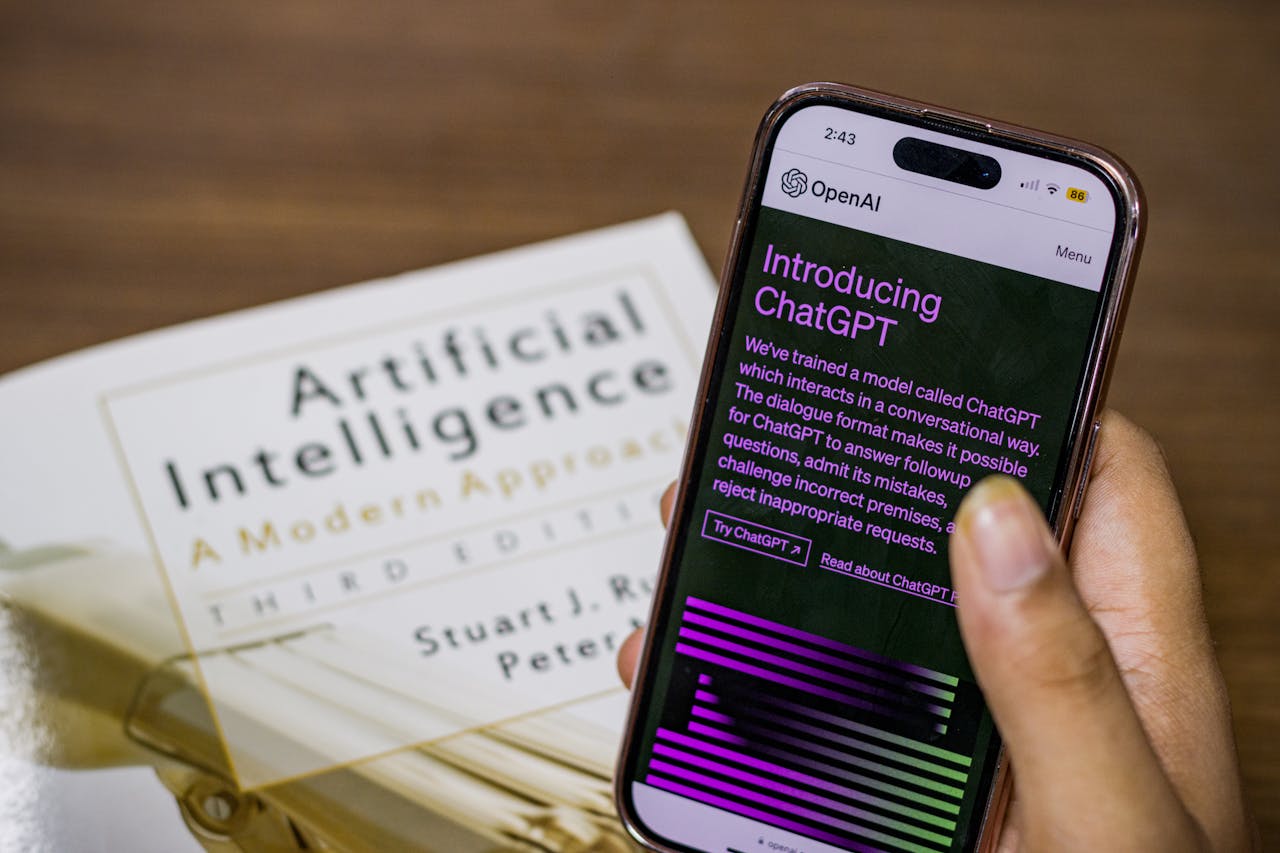
Wondering what ChatGPT is and how it works? This beginner-friendly guide explains everything about OpenAI’s AI chatbot, its features, use cases, pricing, and limitations in 2026.
In this comprehensive guide, we’ll break down exactly what ChatGPT is, how it works under the hood, and most importantly, how you can start using it today to save time and boost your productivity.
What Is ChatGPT? A Simple Explanation
ChatGPT is an artificial intelligence chatbot developed by OpenAI, a San Francisco-based AI research company. The name stands for “Chat Generative Pre-trained Transformer,” which sounds technical but is actually quite straightforward once you break it down.
Think of ChatGPT as an incredibly smart conversation partner that can understand your questions and generate human-like responses. Unlike traditional search engines that show you links to websites, ChatGPT actually reads your question, processes it, and writes a direct answer tailored specifically to what you asked.
Here’s what makes ChatGPT different from anything we’ve seen before:
It understands context. You can have back-and-forth conversations, and ChatGPT remembers what you discussed earlier in the chat. Ask a follow-up question, and it knows exactly what you’re referring to.
It generates original content. Whether you need a business email, a poem for your grandmother’s birthday, or code for a website, ChatGPT creates new content from scratch based on your instructions.
It adapts to your needs. Tell ChatGPT to explain something “like I’m five years old” or “like I’m a PhD student,” and it adjusts its language and complexity accordingly.
How Does ChatGPT Work? The Technology Explained
Understanding how ChatGPT works doesn’t require a computer science degree. Let’s break down the technology in plain English.
The Foundation: Large Language Models
ChatGPT is built on something called a Large Language Model (LLM). Imagine feeding a computer billions of pages of text from books, websites, articles, and conversations. The AI studies all this information to learn patterns in how humans use language.
Through this training process, ChatGPT learned grammar rules, facts about the world, writing styles, and even how to be helpful and polite. It’s similar to how you learned to speak by hearing thousands of conversations growing up, except ChatGPT did this with written text at an enormous scale.
The Transformer Architecture
The “T” in ChatGPT stands for “Transformer,” which is a specific type of neural network architecture. Without getting too technical, transformers are exceptionally good at understanding relationships between words in a sentence.
When you type a question, the transformer analyzes every word and how they relate to each other. This allows ChatGPT to understand not just what words mean individually, but what your entire message is really asking.
How Responses Are Generated
Here’s what happens when you send a message to ChatGPT:
- Your text gets converted into numerical tokens the AI can process
- The model analyzes your input against everything it learned during training
- It predicts the most appropriate next word, then the next, then the next
- This continues until a complete response is generated
- The response appears on your screen in seconds
The fascinating part is that ChatGPT doesn’t retrieve pre-written answers from a database. Every response is generated fresh, which is why you can ask the same question twice and get slightly different answers.
What Can You Use ChatGPT For? Top Use Cases in 2026
The versatility of ChatGPT is what makes it so valuable. Here are the most popular ways Americans are using this AI tool right now.
Writing and Content Creation
ChatGPT excels at helping with virtually any writing task. Content creators, marketers, and everyday users rely on it for drafting blog posts, social media captions, product descriptions, cover letters, and professional emails. The AI can match different tones, from casual and friendly to formal and authoritative.
Many writers use ChatGPT not to replace their work, but to overcome writer’s block or generate initial drafts they can refine with their personal voice.
Coding and Technical Tasks
Software developers have embraced ChatGPT as a coding assistant. It can write code in dozens of programming languages, debug errors, explain complex functions, and even help plan software architecture.
For non-programmers, ChatGPT opens doors that were previously closed. Want to create a simple website, automate a spreadsheet task, or build a basic app? ChatGPT can write the code and explain every step.
Learning and Education
Students and lifelong learners use ChatGPT as a personal tutor. It can explain difficult concepts in simple terms, create practice problems, summarize lengthy articles, and help with homework across nearly every subject.
The key advantage is personalization. Unlike a textbook or video lecture, ChatGPT answers your specific questions and adjusts explanations based on what you already understand.
Business and Marketing
Entrepreneurs and small business owners leverage ChatGPT for market research, competitor analysis, business plan drafting, and marketing strategy development. It can brainstorm product names, write advertising copy, and create customer personas.
For customer support, businesses integrate ChatGPT to handle common inquiries, freeing human agents to focus on complex issues that require personal attention.
Personal Productivity
Beyond professional use, ChatGPT helps with everyday tasks. Planning a trip? ChatGPT can create detailed itineraries. Need recipe ideas based on what’s in your fridge? Done. Want help writing a difficult text message or resolving a personal dilemma? ChatGPT offers thoughtful suggestions.
ChatGPT Free vs. Paid: Which Version Should You Choose?
OpenAI offers multiple tiers of ChatGPT access. Understanding the differences helps you decide which option fits your needs.
ChatGPT Free
The free version gives you access to GPT-4o mini, a capable model that handles most everyday tasks well. You get unlimited basic conversations, though there may be usage limits during peak times.
Free users can access ChatGPT through the web browser or mobile apps for iOS and Android. This tier is perfect for casual users, students, or anyone wanting to explore AI capabilities before committing to a subscription.
ChatGPT Plus ($20/month)
The Plus subscription unlocks access to GPT-4o, OpenAI’s most advanced publicly available model. You get faster response times, priority access during high-demand periods, and early access to new features.
Plus subscribers can also use advanced capabilities like image generation with DALL-E, voice conversations, and the ability to upload and analyze documents, images, and data files.
ChatGPT Pro ($200/month)
For power users and professionals, the Pro tier offers unlimited access to the most capable models, including reasoning models designed for complex problem-solving. This tier targets researchers, developers, and businesses requiring maximum AI capability.
ChatGPT Team and Enterprise
Organizations can purchase team plans with enhanced security, administrative controls, and collaborative features. Enterprise agreements offer custom solutions for large companies with specific compliance and privacy requirements.
Understanding GPT Models: What’s the Difference?
OpenAI has released several versions of the GPT model, each more capable than the last.
GPT-3.5 was the original model that launched ChatGPT to fame. It’s fast and handles basic tasks well but sometimes struggles with complex reasoning or nuanced instructions.
GPT-4 represented a massive leap forward. It understands context better, follows instructions more accurately, and produces higher-quality outputs. This model powers most premium ChatGPT experiences.
GPT-4o (the “o” stands for “omni”) added multimodal capabilities, meaning it can process images, audio, and text within the same conversation. It’s faster than standard GPT-4 while maintaining quality.
o1 and o3 reasoning models are designed for complex problem-solving. These models “think” longer before responding, making them ideal for math, coding, and scientific analysis.
Risks and Limitations: What ChatGPT Can’t Do
While ChatGPT is remarkably capable, understanding its limitations is crucial for using it effectively.
Accuracy Concerns
ChatGPT can confidently state incorrect information. It doesn’t “know” facts the way humans do; it predicts likely responses based on training data. Always verify important facts, especially for medical, legal, or financial decisions.
Knowledge Cutoffs
ChatGPT’s training data has a cutoff date, meaning it may not know about recent events, new products, or updated statistics. While web browsing features help address this, the AI may still miss recent developments.
No True Understanding
Despite seeming intelligent, ChatGPT doesn’t truly understand concepts the way humans do. It recognizes patterns in language but lacks consciousness, emotions, or genuine comprehension. It’s a sophisticated text predictor, not a thinking being.
Privacy Considerations
Information you share with ChatGPT may be used to improve future models unless you opt out. Avoid sharing sensitive personal data, proprietary business information, or confidential details in your conversations.
Potential for Misuse
Like any powerful tool, ChatGPT can be misused for creating misinformation, plagiarism, or deceptive content. Responsible use means being transparent about AI assistance and using the technology ethically.
How to Use ChatGPT Safely and Effectively
Getting the most from ChatGPT while avoiding pitfalls comes down to following smart practices.
Be specific with your prompts. Vague questions get vague answers. The more context and detail you provide, the better ChatGPT can help you.
Verify important information. Use ChatGPT as a starting point, not the final word. Cross-reference facts with reliable sources.
Iterate and refine. Don’t accept the first response if it’s not quite right. Ask ChatGPT to revise, expand, simplify, or approach your question differently.
Protect your privacy. Treat ChatGPT like a public conversation. Don’t share passwords, financial details, or sensitive personal information.
Use it as a tool, not a replacement. ChatGPT enhances human capability but works best when combined with your own judgment, creativity, and expertise.
Getting Started with ChatGPT Today
Ready to try ChatGPT for yourself? Here’s how to begin:
- Visit chat.openai.com or download the ChatGPT app
- Create a free account using your email or existing Google/Microsoft/Apple account
- Start typing in the message box and press enter
- Experiment with different types of questions and requests
- Explore the interface features like conversation history and settings
The best way to understand ChatGPT is through hands-on experience. Start with simple questions, then gradually try more complex tasks as you get comfortable with the technology.
The Future of ChatGPT and Generative AI
ChatGPT represents just the beginning of the generative AI revolution. OpenAI continues releasing improved models with enhanced reasoning, multimodal capabilities, and new features. Competitors like Google’s Gemini, Anthropic’s Claude, and Meta’s Llama are driving rapid innovation across the industry.
For users, this means increasingly powerful AI assistants that integrate into more aspects of work and daily life. Understanding these tools now positions you to leverage their full potential as they continue evolving.
Final Thoughts
ChatGPT has fundamentally changed how we interact with technology, making advanced AI accessible to everyone with an internet connection. Whether you’re a student, professional, entrepreneur, or curious explorer, this tool offers tremendous potential to enhance your productivity and creativity.
The key is approaching ChatGPT as a powerful assistant rather than an infallible oracle. Use it thoughtfully, verify its outputs, and combine its capabilities with your own human judgment.